Common Sense Science Human Body: A Homeschool Mom’s Honest Review
Inside: My daughter couldn’t wait to dive into Common Sense Science Human Body, and honestly, I can see why. In this Common Sense Science Human Body review, I’m sharing how this hands-on homeschool anatomy curriculum helped bring science to life in our homeschool.
If your children are fascinated by the human body, constantly asking questions about bones, muscles, organs, and how everything works together, then you may be searching for a quality human body homeschool curriculum.
That’s exactly where we found ourselves recently.
Over the past several months, my daughter has been absolutely fascinated with the human body. She loves learning about how our bodies work, what happens inside us, and why God designed us the way He did.
Following my children’s interests has always been one of my favorite homeschool methods, so when the opportunity came to review Common Sense Science Human Body from Common Sense Press, I knew it would be a great fit for our homeschool.
And today, you get to go inside as I share my Common Sense Science Human Body review and help you decide whether this homeschool anatomy curriculum might be a good fit for your family, too.
Keep reading, friend!
This post is a product or curriculum review & I was compensated for my time. All opinions are my own and are based on our experience with the product; I was not required to create a positive review for this company.
What Is Common Sense Science Human Body?
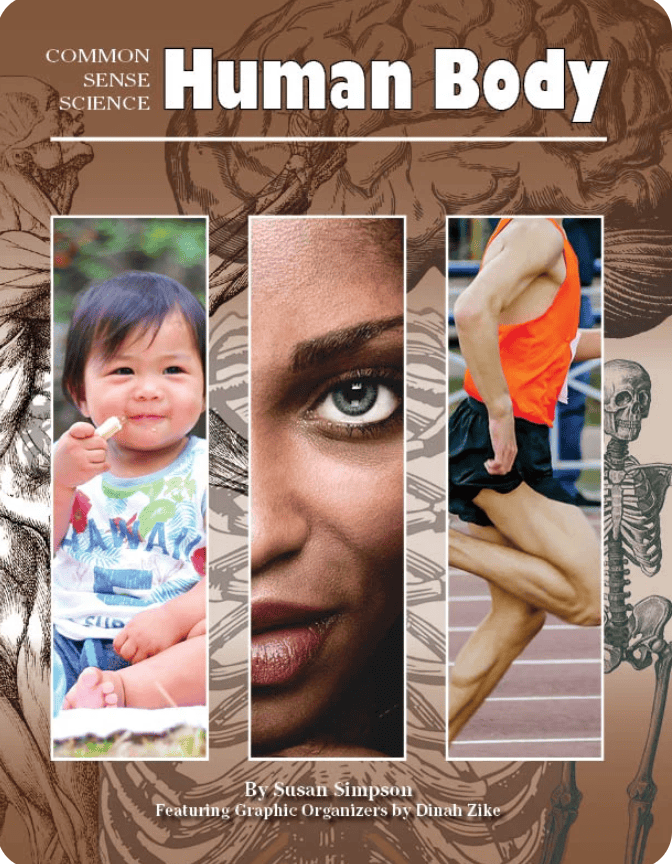
The Common Sense Science Human Body curriculum is a hands-on science program from Common Sense Press designed for students in grades 1-6. It provides an in-depth study of the major systems of the human body while encouraging active participation through labs, graphic organizers, and interactive activities.
Rather than simply reading a textbook and answering questions, students explore concepts through a combination of:
- Hands-on labs
- Vocabulary activities
- Research opportunities
- Graphic organizers
- Interactive projects
- and learning activities
The curriculum covers major body systems, including:
- Skeletal System
- Muscular System
- Respiratory System
- Circulatory System
- Nervous System
- Digestive System
- Urinary System
- Lymphatic System
- Immune System
- Endocrine System
- Reproductive System
- Integumentary System
This human body homeschool curriculum book states that it’s designed to be completed in 18 weeks, but personally, I wouldn’t rush it. Common Sense Press focuses on meaningful learning, and this book is no exception.
So while you could easily complete the recommended 3 lessons per week and wrap it all up in 18 weeks, also know that if your family wants (or needs) longer, that’s OK, too.
Why We Chose This Human Body Homeschool Curriculum
As you may already know… Science is one of those subjects we sometimes struggle to prioritize consistently in our homeschool.
Math gets done. Language arts gets done. History gets done.
But Science? Well, sometimes it gets pushed aside.
That’s why I appreciate a homeschool program that does some of the heavy lifting for me.
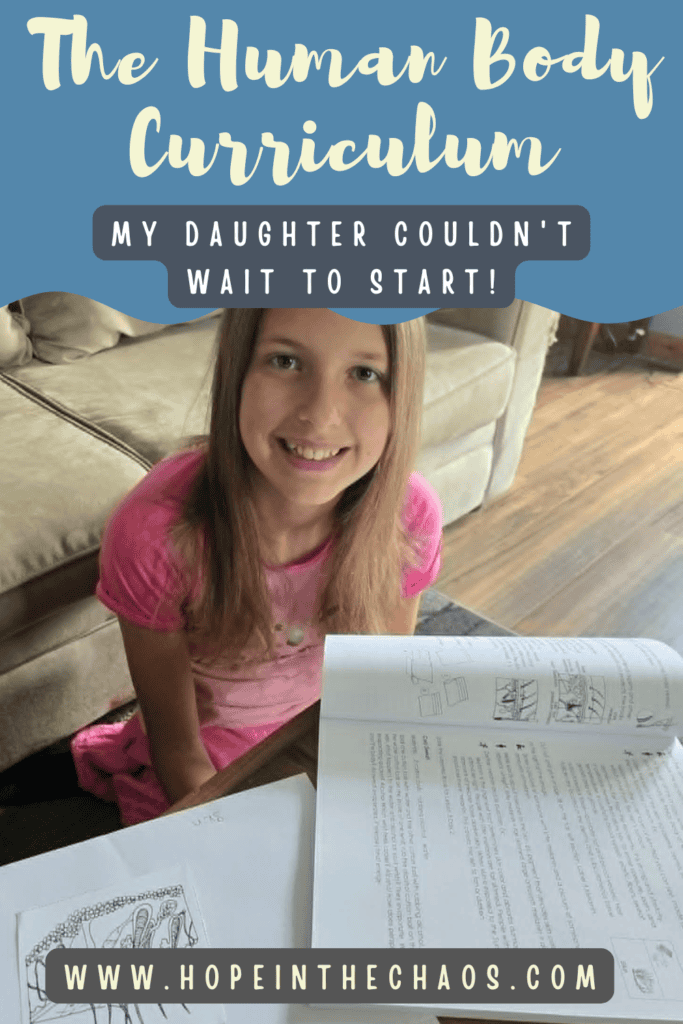
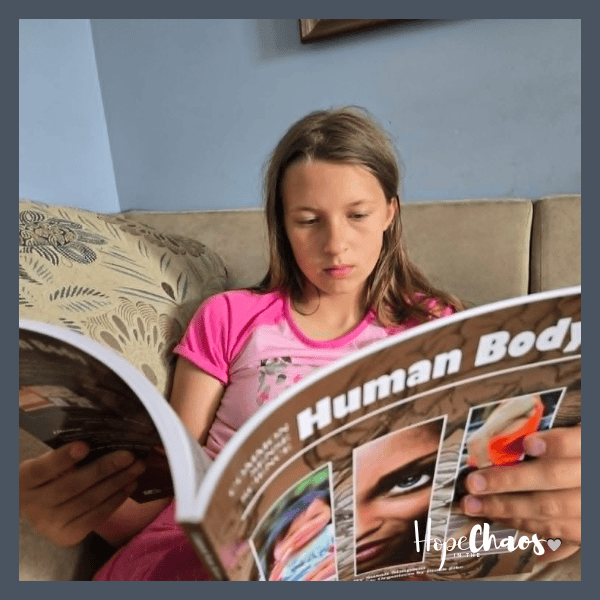
When my 6th-grade daughter saw the Common Sense Science Human Body curriculum arrive, she could hardly wait to dig in. She tore open the mailer and immediately started flipping through the pages, excited to see what she would learn.
Her only disappointment?
The curriculum is printed in black and white.
As a visual learner who loves colorful books, she initially wished there were more color photographs and illustrations throughout the lessons.
Thankfully, that disappointment didn’t last long. Once she realized how many activities, projects, and hands-on components were included, she quickly forgot all about the lack of color and jumped right into learning.
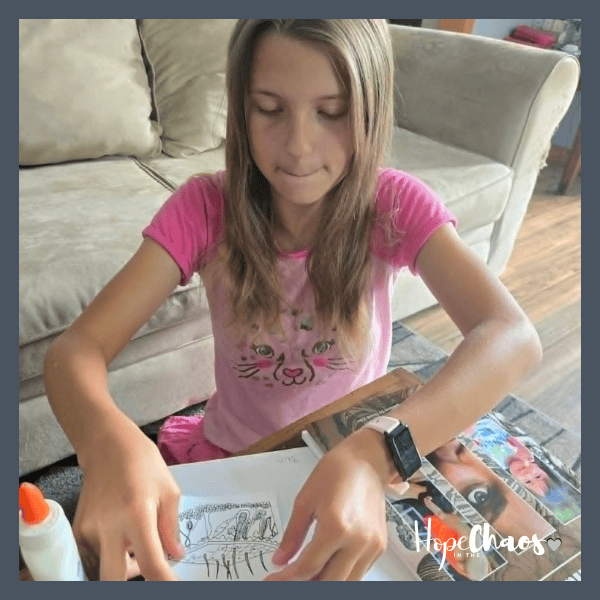
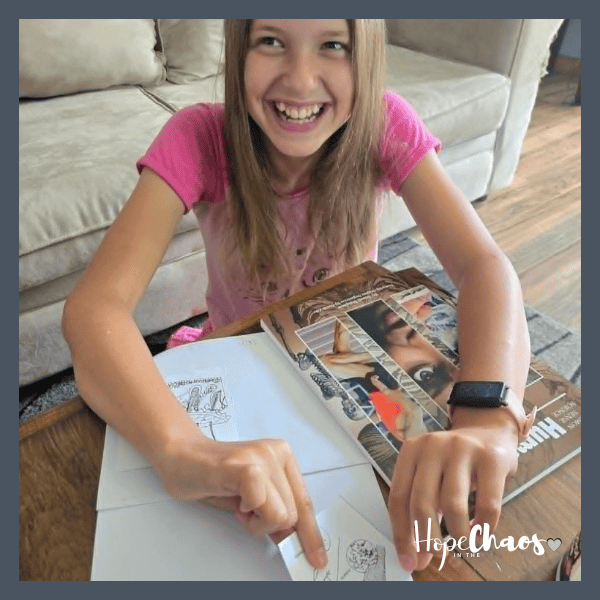
Oh, and she got a good laugh at dear old mom, who, even after all the years of homeschooling, struggles with the craftier side of hands-on projects. (True story… I had to look up some of the directions NOT because Common Sense Press failed to explain them well, but because I need to SEE how to create those tab folds. This homeschool mama is not crafty, you guys! 😅)
What Comes With Common Sense Science Human Body?
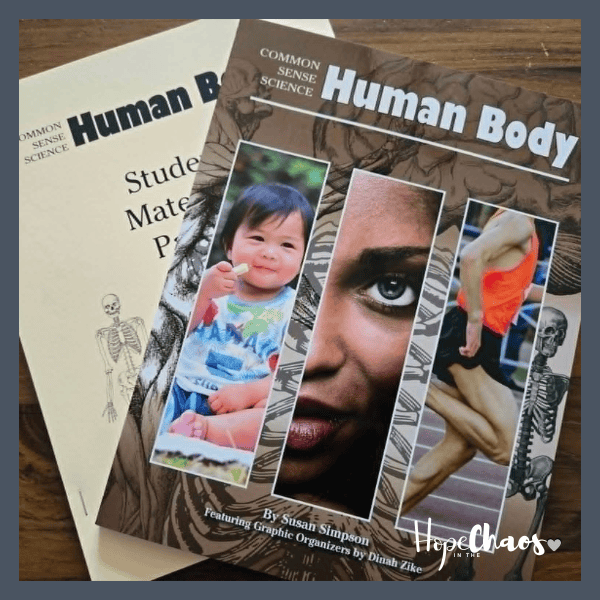
To complete the program, you’ll need both the student book and the Student Materials Packet.
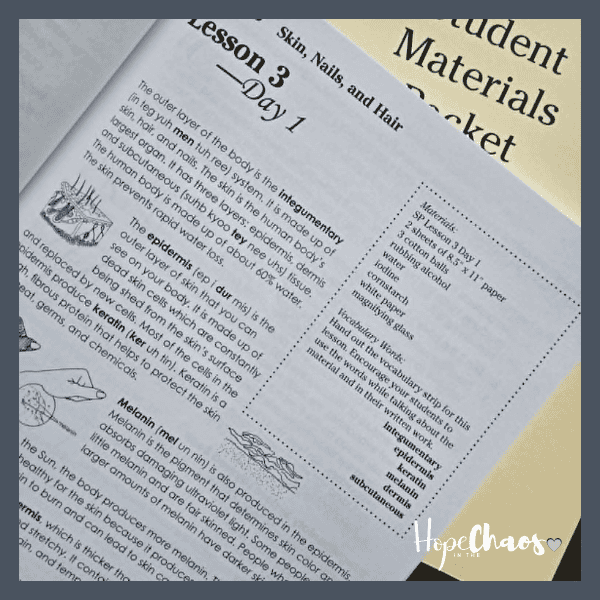
The Student Book contains:
- Lesson content
- Teaching information
- Vocabulary
- Lab instructions
- Activity directions
The Student Materials Packet includes:
- Graphic organizer templates
- Lab graphics
- Vocabulary materials
While it may be sold separately, the materials packet is an important part of the curriculum, as many projects rely on its printable components.
You will also need some additional supplies for the hands-on learning aspects of Common Sense Science Human Body, but most (if not all) are items you already have.
One thing I appreciated about the entire program was that everything felt well-organized. The student book clearly explained the lesson, while the materials packet provided the pieces needed to complete the projects and activities. I never found myself wondering how to use this homeschool science curriculum.
What a Typical Lesson Looks Like
Honestly, your mileage may vary here.
With a younger student, they will definitely need you to lead the way. This looks like reading the scripted lessons, gathering materials, and learning how to create all of the hands-on pieces with your child.
An older student, one who has already completed a previous human body study, or one who is particularly independent, may be able to complete this book independently. You could simply review their completed work and projects to assess their understanding.
Either way, the lessons are simple, straightforward, and perfect for a homeschool mom who wants the ease of guided learning.

Hands-On Learning Makes Science Stick
Ok, stick with me here because this may sound a bit like a contradiction, but it’s not.
One of the things I appreciate most about this Common Sense Press science curriculum is the emphasis on hands-on learning. Kids love messy, crafty, and hands-on projects that allow them to learn with all of their senses.
Unfortunately, many elementary science programs rely heavily on reading and worksheets. While those methods certainly have their place, children often remember information better when they actively engage with it.
Common Sense Science Human Body uses:
Labs With Household Supplies
The labs are designed to be homeschool-friendly and use mostly common household materials. That means you won’t need expensive science equipment or specialty kits to complete the activities.
Graphic Organizers
The curriculum also includes 3D graphic organizers that help students visualize and organize what they’re learning.
These aren’t simply worksheets.
Students cut, assemble, and build interactive learning tools that reinforce the concepts being taught. This is especially helpful for kinesthetic learners who learn best by doing. (This is the part that this homeschool mom, a non-kinesthetic learner, struggled with the most. It’s truly an “it’s not you, it’s me” kind of situation that gave my daughter plenty of giggles.)
Why This Elementary Human Body Science Curriculum Works for Multiple Ages
One feature that stood out to me is the curriculum’s multilevel design.
If you’re homeschooling multiple children, you know how valuable it can be to combine subjects whenever possible.
Common Sense Science Human Body was designed with multi-age teaching in mind, making it easier for families to learn together while still adapting expectations for different ages and ability levels.
As a homeschool mom who has taught multiple ages around the same table for years, I always appreciate curriculum that recognizes the reality of family-style learning.

How It Compares to Other Common Sense Press Programs
This review isn’t my first experience with Common Sense Press.
If you’ve read my Learning Language Arts Through Literature review, then you already know I’m a fan of curriculum that keeps learning meaningful and engaging.
Like Learning Language Arts Through Literature, this Common Sense Science Human Body curriculum focuses on helping students truly understand concepts rather than simply memorize facts.
The hands-on approach helps bring science to life in a way many traditional textbooks simply don’t.
What We Loved About This Human Body Homeschool Curriculum
After spending time with the curriculum, here are our favorite features:
Interest-Led Learning
My daughter was genuinely excited to learn about the subject and couldn’t wait to get started. And if there’s one thing I’ve learned as a homeschool mom, it’s that when children are interested in a topic, learning becomes much easier.
Easy Preparation
The lessons are organized and straightforward, making it easier for busy homeschool moms to implement. The book clearly lays out what you need for the day.
Multi-Age Friendly
Families with multiple children can easily adapt the program for different ages.
And while I can’t say that we loved the hands-on activities, I can honestly say that I see where they are truly beneficial to the program and to student learning. They add variety, keep the lessons from feeling repetitive, and, should you complete the book, give the student an amazing collection of lessons at the end.
Who Is Common Sense Science Human Body Best For?
As a homeschool mom and curriculum reviewer, I would especially recommend this curriculum for:
- Homeschool families studying the human body
- Elementary students in grades 1-6
- Kinesthetic learners
- Multi-age homeschool families
- Parents who want open-and-go science lessons
- Students who enjoy projects and hands-on learning
- Homeschool families studying anatomy as part of a unit study
While Common Sense Press advertises this for grades 1-6, I also believe this would be a great fit for middle school students who need a simple introductory course to the human body.
It may not be the best fit for:
- Students who dislike cutting, folding, and assembling projects
- Families looking for a colorful, textbook-style science curriculum
- Homeschool moms who prefer discussion-based science without crafts

Why Human Body Science for Homeschoolers Doesn’t Have to Be Complicated
As a homeschool mom who sometimes struggles to make science happen consistently, I appreciated using a program that provided clear lessons, engaging activities, and plenty of opportunities for deeper exploration. Even though the hands-on projects stretched me outside my comfort zone, they helped bring the material to life for my daughter and reminded her that grown-ups can struggle and do hard things, too.
That’s a life lesson worth learning how to do a hamburger, hot dog, and taco fold for.
My daughter’s initial disappointment over the black-and-white pages faded fast once she got her hands on the activities, and honestly? Watching her dive in headfirst was all the convincing I needed. For our family, the Common Sense Science Human Body curriculum has made anatomy approachable, engaging, and, dare I say it, actually fun.
If your child is curious about the human body and you’re looking for a homeschool anatomy curriculum that pairs solid science instruction with hands-on learning, I’d encourage you to check out Common Sense Science Human Body from Common Sense Press.
While you’re there, browse everything Common Sense Press has to offer. Who knows, you might just find your next favorite curriculum!
Happy homeschooling, friend! 😊

Have you used any Common Sense Press curriculum in your homeschool? I’d love to hear about it in the comments!
Want More Homeschool Science Help?
Let’s see how I can help with your homeschool science!
- A Complete Earth Day Homeschool Unit Study (Free Resources Included!)
- 10 Fun & Easy Summer Science Ideas Your Kids Will Love
- 20 Amazing Resources That Are Perfect for Shark Week!


Kelly Warner is a seasoned homeschooling mom from Maine, where she lives with her husband and their four children—two of whom are proud homeschool graduates. With years of experience navigating the ups and downs of home education, Kelly is passionate about helping families simplify their journey and find encouragement amidst the chaos of daily life. She shares practical tips, inspiration, and real-life homeschooling wisdom on her website, Hope In The Chaos, and across social media.