The Value of Childhood Chores
For reasons that I simply do not understand, the idea of childhood chores has become something of a taboo topic. Far too many parents think that chores are outdated, restrict children too much, put a damper on a wild & carefree childhood, and even believe that chores will harm their children. All the while, these parents fail to realize that they are robbing their children of the lessons & training that childhood chores bring.
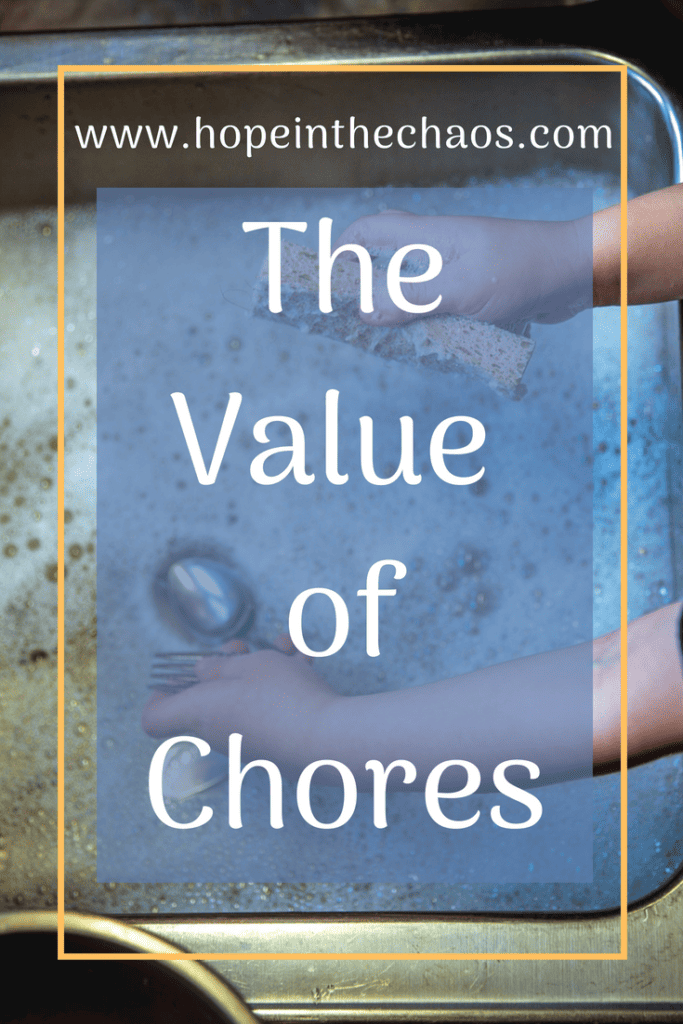
Parents today are often reluctant to assign chores to their children. As a result, these children are missing out on valuable lessons and life skills.
I am not sure when chores became such a negative thing. As a kid growing up chores, were a part of life. For the kids I babysat as a teen, chores were required. My friends all had chores as well.
Somewhere between then and now though, the word chores was dropped from the general vocabulary. Sadly, when you ask around today, you will often hear parents bemoaning the laziness of their own children while at the same time, confessing a lack of household chores.
Why? Why have we as a society decided that “kids need to be kids” and stopped giving them responsibilities? When did picking up after yourself become a bad thing? At what point in time did little Johnny become incapable of taking out the trash? Or little Suzzy fail to learn to wash dishes?
I have an idea, and it’s probably not going to be a popular one.
When parents transitioned themselves to the friend zone.
Cause and Effect
We all learned about cause and effect in school. Remember the book “If You Give A Mouse A Cookie“… classic cause and effect story. If you do one thing, then this will happen. The same is true for the opposite: if you don’t do one thing then the other thing will not happen.
If you give your children chores, they will learn. And those lessons will be so much more than how to wash the dishes.
Starting Out Young
In our home chores start when they are young enough to make a mess. Babies learn to put their toys away when they are done. That playing is fun, but cleaning up is a good thing too. As the kids get older we start to expect more from them, always considering age and ability of course.
Formal chores are assigned at age 5 and change accordingly (if you are unsure when to start chores, you can learn about kids chores by age). It might be something as simple as cleaning up a common area in the home, vacuuming a floor, or helping take out the trash. Recently my six-year-old asked if he could put away the clean silverware – absolutely kid! As they grow their chores evolve and change based on the needs of the home and what they can and cannot do.
For me though, the goal of chores is not just so I don’t have to do that particular task. Sure, some of the duties I assign to the kids are done simply because I don’t want to have to do it. The main goal, however, is much more profound. My main goal in giving chores is to teach them about something much bigger.
My 5 Top Reasons For Assigning Chores
- Assigning chores teaches life skills to my children. How can I expect them to know how to properly care for their own homes as adults if I am not teaching them when they are children? By assigning chores I am teaching them that a clean home needs to be worked at.
- Assigning chores to them how to be a part of a team. Chores put the focus on the whole home, and having children help with the cleaning and care of the home shows them that it’s a big job and that big jobs are best done as a team. It shows them that everyone can contribute and that everyone has an important part.
- Assigning chores teaches them to care for their stuff. We all have stuff, but we all need to take care of it. Respecting ourselves and our homes enough to properly care for them is something that is sorely lacking in our current “throw-away” society.
- Assigning chores teaches them the value of hard work. The dishes are not going to wash themselves. The floors will not pick up the toys and games. The laundry will not fold itself. I could really go on and on, but I think you get the point. Maintaining a clean home is hard work.
- Assigning chores teaches them that the responsibility of a clean home is not just for one person. It’s for everyone. My husband helps, the kids help. It’s pretty basic. And while the care of the home does fall primarily on my shoulders, that does not mean the cleaning of the home does. Delegation is important.
Finding Balance

I know in our busy lives it can be challenging to find the right balance of free time and chores. Kids today are bombarded with tasks and responsibilities from school, extra-curricular activities, and their own interests.
I even get that kids need to be kids, and that includes being wild & free. They need time & space to run and play and learn, but they also need to learn to clean up, help out, and pitch in.
In our home, we start early because we feel it’s that important. We are laying a foundation that will (hopefully) last a lifetime.
And yes, there are days when riding bikes outside takes president over the dishes. Or when a board game will beat out scrubbing the bath. But in all honesty, those days are few and far between because completing your chores is just that important. Learning to balance your responsibilities to your family with your want to play is something we all need to do.
So if you haven’t assigned chores in your home yet, or if you haven’t revamped your home’s chore chart for kids in a while, I encourage you to try it. You just may be surprised by the experience of assigning chores, following through, and teaching your children the value of hard work.
And you just may be surprised how enjoyable it can be to do dishes with a teen, mop with a toddler, or fold laundry as a family.
In the end, when chores are assigned, the whole family wins, so you really have nothing to lose.
How do you handle chores in your home? Comment below!

Kelly Warner is a seasoned homeschooling mom from Maine, where she lives with her husband and their four children—two of whom are proud homeschool graduates. With years of experience navigating the ups and downs of home education, Kelly is passionate about helping families simplify their journey and find encouragement amidst the chaos of daily life. She shares practical tips, inspiration, and real-life homeschooling wisdom on her website, Hope In The Chaos, and across social media.





Completely agree! My daughter is almost 6 and she has chores. She’s not always happy about it but we have many conversations about the importance of doing our part in our home and often times she does them without complaining.
Courtney,
I too have a six year old, and he prefers to do the chores he volunteers for rather than the one’s assigned. Par for the course I think. Keep teaching her – someday she will thank you for it!
-Kelly
My girls and I had a rather dramatic conversation about chores just last night! I chronicled it on my blog thisgranolamama.com. Funny, you and I are using the same theme! 🙂
We’re starting homeschooling next school year. Increasing their level of independence in the “life skills” area is high on my list!
Couldn’t agree more!!! My best friend complains to me how lazy my niece and nephew are, and I just drop my jaw when she says they have no chores! I still have to repeat the same tasks weekly, but over here my 5 and 8 year old can wash their clothes and put them away. It’s not how I would put them away, their hands are smaller etc. But I had to learn to give up some control on some levels, and make them help, and learn! On the other hand, after my mom passed I had my hand in raising my sisters at some point or another, and I made the huge mistake of not making them do it. And I can see where I’ve caused one of them more harm than good. My palms to my forehead often…lol