5 Tips for Teaching A Homeschool Foreign Language Program
No longer just for high school, homeschool foreign language is becoming a common course in both elementary and middle school grades. With a variety of programs to choose from and plenty of support for homeschool families, not to mention oodles of research showing the benefits of foreign language instruction, it can be easy to see why more and more homeschoolers are including foreign languages in their homeschool. Today, I’m, giving you 5 tips to help you teach a foreign language at home.

Whether you are looking for a printed program or opt for something online, homeschool foreign language programs are readily available.
But, if you are unfamiliar with teaching foreign language in your homeschool, or even with speaking a foreign language yourself, there may be a bit of confusion & even overwhelm when it comes to wading through your options, making a selection, and leading the instruction.
So today, I want to show you the best way to learn a foreign language at home plus share with you an exciting offer on a homeschool foreign language program we’ve been using in our homeschool!
This post is a product or curriculum review & I was compensated for my time. All opinions are my own and are based on our experience with the product; I was not required to create a positive review for this company.
Benefits of Learning a Foreign Language for Homeschoolers
While colleges may require your homeschooler to complete at least two years of a foreign language before enrolling in their program, more and more homeschool families are choosing to include foreign language for homeschool in the younger grades.
Why?
Perhaps they are looking to help a child connect with family members that speak another language.
Or maybe their child shows an interest in learning because they were exposed to a new language somewhere. My daughter began showing an interest in Spanish thanks to the pocket calendar we have on our wall. For years, we’ve covered months of the year, days of the week, and seasons in a simple, curiosity-led way.
Whether your child shows an interest in learning a foreign language in homeschool because of a friend, family member, television show, ad they saw, or even a pocket calendar on your wall – it doesn’t matter.
What does matter is that you grab the benefits of learning a foreign language while your child is ready, willing, and interested.

Six brain benefits of learning a foreign language
What are the six benefits of learning a foreign language?
- More gray & white matter (you know, more memory)
- Increased focus & attention (something this modern world desperately needs!)
- Enhanced cognitive development & high executive functioning (a well equipped brain ready to handle more challenging tasks)
- Enhanced creative & critical thinking skills (both very good things!)
- Greater social-emotional skills (helpful for connecting with others)
- Increased empathy (from learning more about the world your child lives in).
Social and economic benefits of learning a foreign language
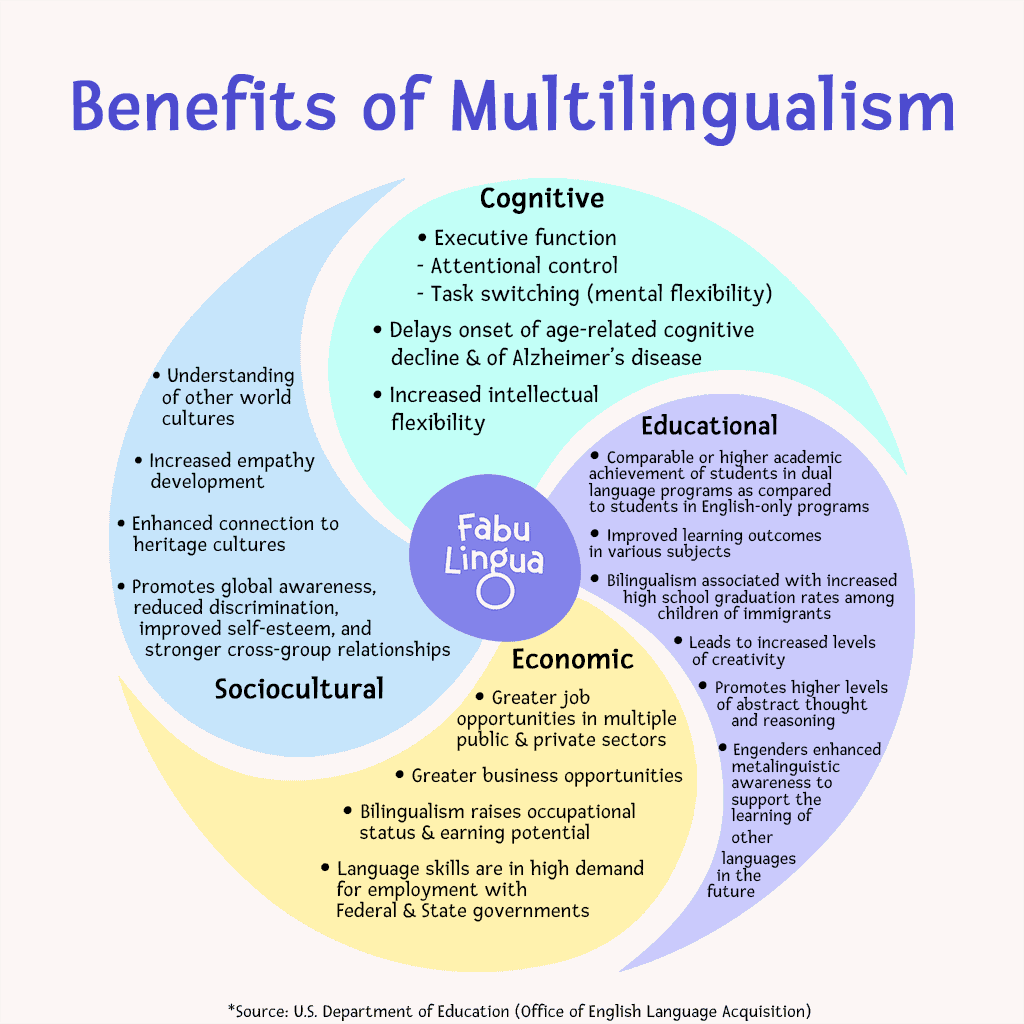
As you can see in the image, there are so many benefits of learning a foreign language for your child that go well beyond simply being able to speak in another language.
The Building Blocks of Homeschooling a Foreign Language
When choosing the best way to homeschool a foreign language online, keep in mind that traditional language lessons have traditionally been taught very ineffectively.
I mean, just think back to all those years you spent in high school memorizing vocabulary, learning conjugations, and barely scraping by… and what do we have to show for it? Perhaps a few phrases at best, much the bemoan of your teacher.
Sadly, my friend, you’re not alone! Only 1% of people who study a foreign language in a US High School Classroom go on to become proficient in that language.
So first things first. Before evaluating various online methods for homeschooling foreign languages online, let’s look at what the science tells us are the most important principles to be aware of:
- Comprehensible input – Studies show that learning a foreign language is about so much more than simply memorizing vocabulary words and comprehensible input (understanding what you are hearing) is actually a much more vital part of learning a new language.
- Avoid stress or boredom – Truly! It’s crucial that learning is fun, compelling, and engaging, especially in a homeschool foreign language program.
- Make it story-based – You know I love learning through books in our homeschool so it’s no surprise that story-based learning is one of the best ways to learn a foreign language at home!
- Respect the silent period – don’t ask too much too early of your child. Learning a foreign language can be a challenging process, so be prepared to be patient and trust the process. What looks like a lack of process is often a brain simply storing away information, sorting, and organizing. Results will come with time.
- Don’t focus on grammar in the first few years – there’s a place for explicit grammar instruction, but it’s years after you’ve had a lot of exposure to comprehensible input. Think about it, we didn’t start learning grammar in our native language until we had a really solid foundation from exposure to comprehensible input and the same is true when learning a homeschool foreign language.

The 5 Best Ways to Learn a Foreign Language at Home
1. Comprehensible Input stories on YouTube
There are lots of comprehensible stories on YouTube, but if you type ‘comprehensible input’ into YouTube, you’ll find most are designed for adults. It’s not that they’re inappropriate for children, they’re just not designed to be interesting to children. Free Comprehensible input stories for children on YouTube can be found at Calico, BookBox Spanish, Muzzy Spanish, and on FabuLingua’s free youtube channel where each page of their comprehensible stories is posted for free. These are great resources because they provide CI without using subtitles, which is obviously key for pre-readers.
2. Streaming Subscriptions such as Netflix
As an extra layer of support, to help you tune into the language, make sure you’re using streaming subscriptions such as Netflix. Set your child up with an account, select age-appropriate filters, and let your child watch TV guilt free when you set it to a foreign language.
For best results, pick a series, maybe even one your child is familiar with, and then sit back and allow them to be immersed in the new language. Feel free to use English subtitles at first, but eventually switch to Spanish and then none as your child learns how to speak and understand their homeschool foreign language.
3. Box Sets
In the last few years box sets have become all the rage, and so now you have lots of choices of Spanish language activity boxes that are delivered to your door. They come with a variety of activities and typically they require significant parent involvement. Some options include:
- Feppy
- Mamallamalinguist
- Celebrate Cultures
- Hola Amigo
- Talkbox.Mom
4. Homeschool Curriculum
Whether you are looking at a textbook, a DVD program, or an online course, there are many amazing homeschool curricula options to help your child complete their homeschool foreign language class.
5. Spanish Learning Apps
Apps are certainly convenient and affordable, but many language learning apps on the market are actually designed for adults, with content repurposed for kids but not actually designed for kids. This means that while they may initially have novelty value, they’re not designed to capture a child’s attention for extended periods of time.
And apps that are designed for kids tend to be flashcard-based and while this may help with math facts, it’s actually not the best way to learn a foreign language, including Spanish. The best way to acquire Spanish is through lots of comprehensible input designed for kids.

Something New For Learning A Foreign Language At Home
There is one app out there that uses comprehensible input to teach foreign language at home and it’s called FabuLingua. We’ve been using it in our homeschool and having so much fun! Or should I say, muy divertido?
FabuLingua is a platform of comprehensible input through stories, designed to be compelling to kids. It is based on the science of second language acquisition (it even has a patent), it is based on stories and the power of reading to children, and is wrapped up in a fun mobile game!
In the mobile game, your child can unlock new locations as they make progress, earn keys to open treasure chests as they read stories, and earn playing cards for a card battler and stickers for a magic sticker book as they open more treasure chests.
I love that the more stories they read, the more they are rewarded and the more locations they unlock on the island. My daughter was eager to use FabuLingua, whether she was inside or outside! She was able to record herself speaking (helping her catch pronunciation issues), play mini-games, and go through the same story multiple times working towards mastery of the new words introduced.
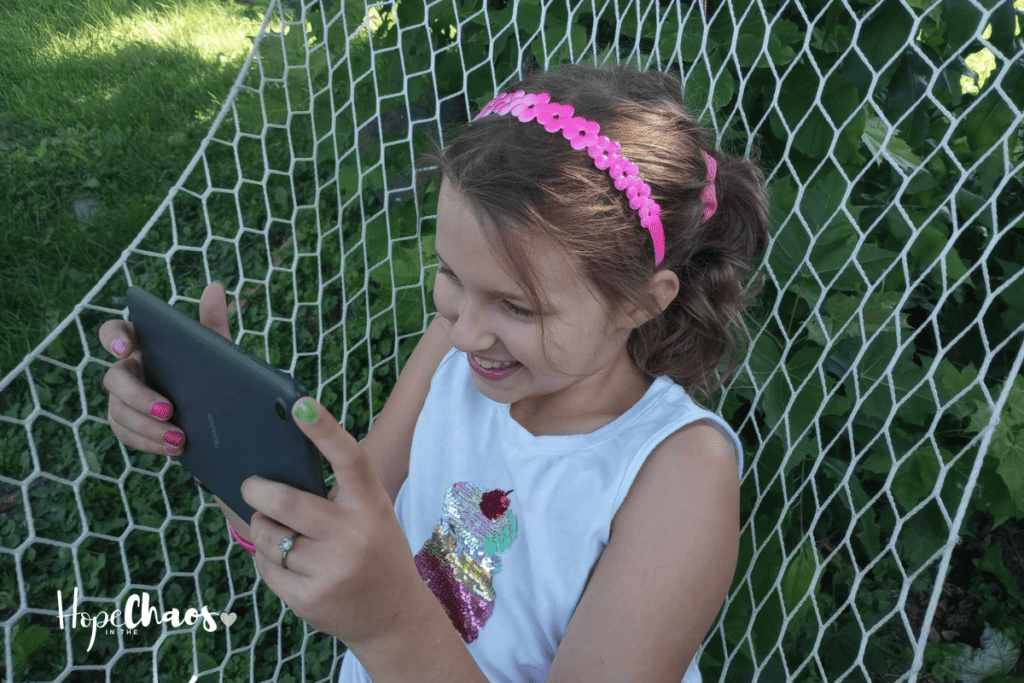
It is so comprehensive, so much more than what you think of in an ‘app’. It works on all linguistic skills, from comprehension to pronunciation, reading, and writing.
Oh, and I don’t need to speak a word of Spanish for them to use it! Which is good because while I’m sure Sra. Decker tried, this former student does not remember much of what she learned in her high school Spanish class.
And did I mention the art – it is truly beautiful! All the stories are culturally authentic, written and illustrated by Spanish and Latin-American artists!
And finally, as a busy homeschool parent, I actually love they can do FabuLingua independently, so I can do other things during their Spanish class. I also love the price! An annual subscription is just $69.99 and I get six profiles, so I can teach all my kids Spanish for the year for a really affordable price.
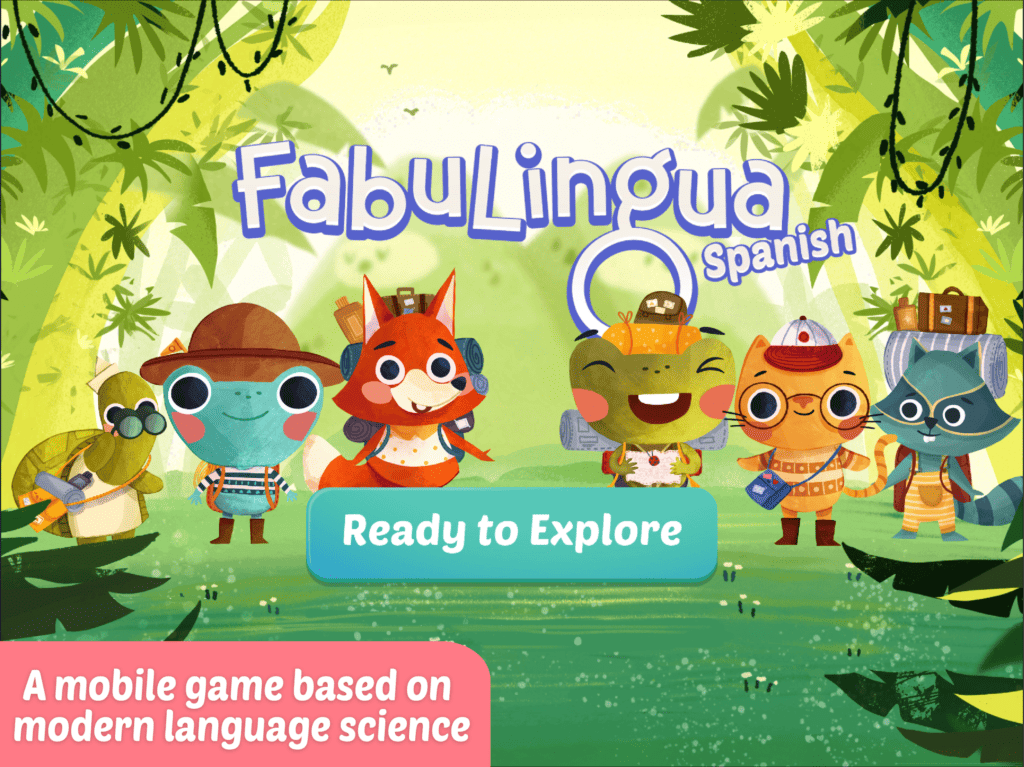
Try FabuLingua for Free Today!
If you are looking to add a homeschool foreign language program to your schedule, be sure to give FabuLingua a try. This interactive app is a fantastic way to get your kids excited about their Spanish lessons while also harnessing the best methods for teaching a foreign language at home.
Oh, and right now you can try FabuLingua for free. Simply use code HOPE1MONTHFREE at checkout!


Kelly Warner is a seasoned homeschooling mom from Maine, where she lives with her husband and their four children—two of whom are proud homeschool graduates. With years of experience navigating the ups and downs of home education, Kelly is passionate about helping families simplify their journey and find encouragement amidst the chaos of daily life. She shares practical tips, inspiration, and real-life homeschooling wisdom on her website, Hope In The Chaos, and across social media.


