With Rabbit Trails Through Literature, We Are Sparking Curiosity and Learning Naturally
We are ditching boring Language Arts programs for this curriculum review and, instead, following the trail of learning where it may go with Rabbit Trails Through Literature from This Bit of Life. Armed with this brand new program and three of the books used in Level 1, my two elementary-level students and I ventured off to explore Language Arts in a new and exciting way.

A Love of Language Arts
Language Arts is by far one of my favorite subjects to teach in our homeschool. With so many opportunities to learn and so many ways to use it, English more of an art to me and I want to teach it that way. I want to teach it in a way that allows my children to see the various trails and usage that this one subject can have.
Over the years that we have been homeschooling, I have slowly transitioned our Language Arts approach to reflect this. No longer do we use the “learn a skill then practice a skill method” that we began with. In its place, we have books and stories that allow us to interweave our Language Arts into the other subjects we learn about every day.
We stop when a skill we were just discussing comes up in a book that we are reading. We discuss language usage and sentence structures in stories. Copywork routinely helps us to work on penmanship, reinforce grammar skills, and improve vocabulary. And literature makes up the foundation of our entire program – one that is pieced together and shaped by various programs as well as questions that spark a curiosity to learn something new.
Something New This Way Comes

When Christine Zell of This Bit of Life first told me the concept for her Language Arts program I knew that I wanted to try it out. Her vision for Rabbit Trails Through Literature was exactly what I have been trying to create here in our homeschool.
And when she told me that we could review it, well, there is a fair chance she heard my excitement from states away! 😉
The goal of Rabbit Trails is to create a Language Arts program for elementary-level students that is low key, easy to use, and fun. To remove the fear of a rigid program with hard and fast rules (that always have exceptions) and instill a natural approach. All the while, opening up a love for learning all around while naturally weaving in other subjects that come up.
As a homeschooler parent, I could simply tell you that Rabbit Trails Through Literature hits all of those marks and then some. But as a curriculum reviewer, I’m going to do more. I’m going to take you inside the curriculum and show you how we used it here in our home and why we will be keeping this Language Arts program in the rotation come fall.
Getting Started With Rabbit Trails Through Literature
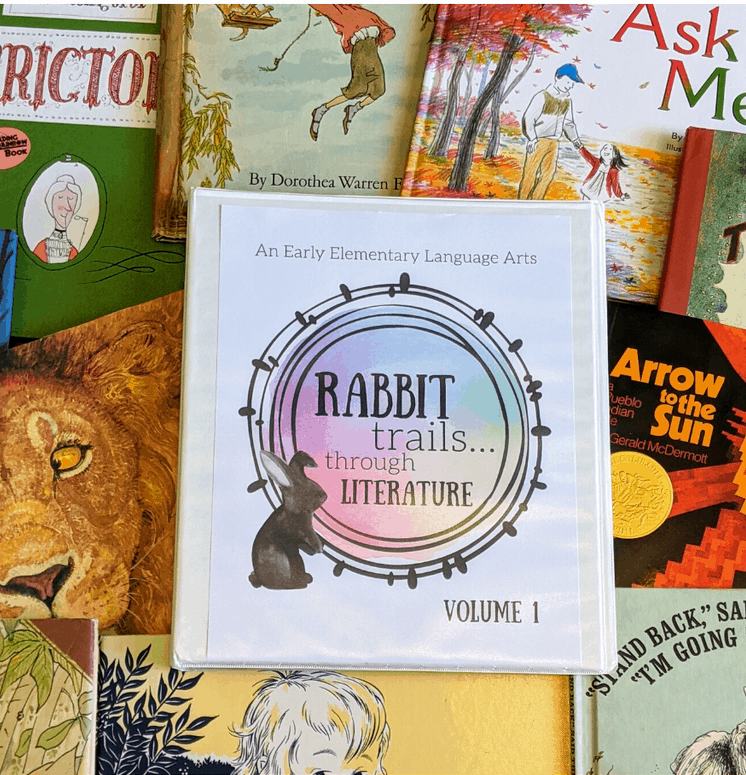
Rabbit Trails Through Literature is a Charlotte Mason-inspired elementary Language Arts program that is ideally suited for grades 1-3. Being Charlotte Mason-inspired means it is based around quality literature and doesn’t have a lot of endless busywork built-in.
Rather, it focuses on teaching your child valuable Language Arts skills while also teaching your child to simply learn to think and follow their natural curiosity.
To use the program you will need a few things. First is the curriculum. Second is access to 16 different books. These books were chosen because they are timeless tales, many of which are award-winning titles, that have stood the test of time for both the story told and the quality writing and imagery. Many of these books can be found at your local library, but if not, there are some great online options to choose from including Thrift Books and Amazon.
Another component you will need are notebooks for your children (or you if they are unable to write independently yet) to use during the year.
Rabbit Trails is designed with 32-weeks of lessons. This is perfect for the homeschooler who can never seem to finish a 36-week program in a year (a-hem, me) and those who just know that a story will lead to more.
One slight problem though…
For us, this review started kind of complicated – but that’s not because of the curriculum. No, the social distancing rules currently in place meant my library was off-limits… a big problem for a curriculum that requires the use of literature.
Worse, our copy of Blueberries For Sal, one of the books needed, appeared to have vanished! Multiple people in my home searched the multiple bookshelves around the house, yet no one could find it.
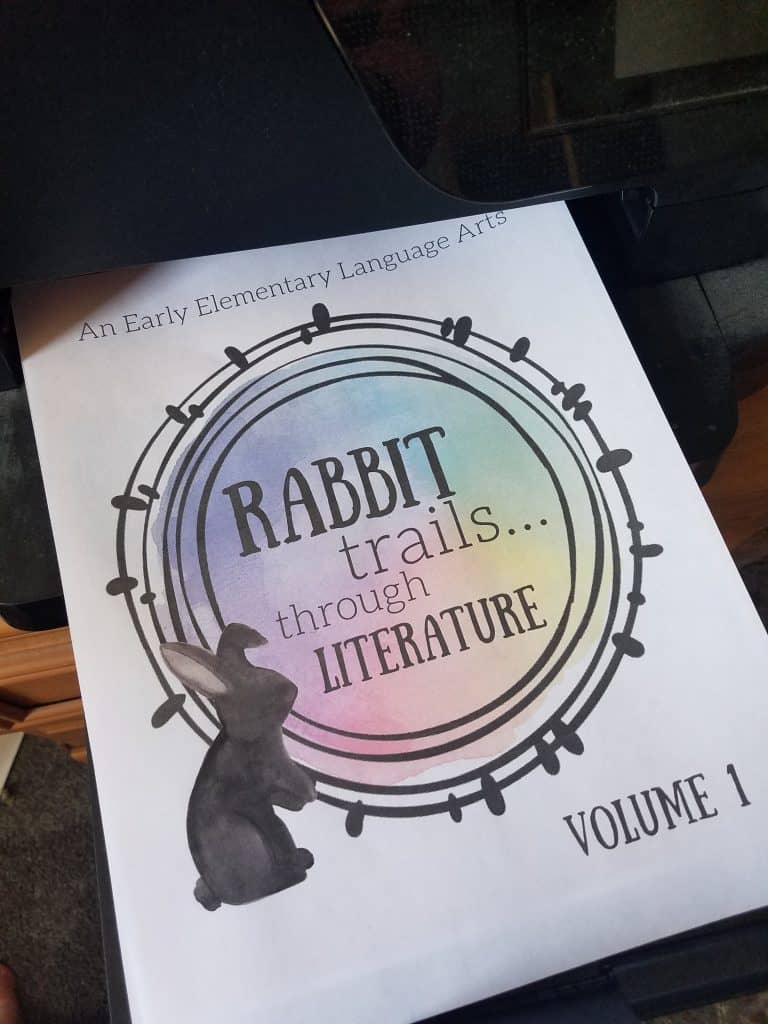
Sadly, the first section of Rabbit Trails Through Literature that we hoped to start on sat, unused, on my printer, for weeks while I waited for the USPS to deliver the three books I ordered online.
But, once the first book arrived we were all ready to dig in!
Finally, Our First Day With Rabbit Trails!
While my younger children are in grades k and 4, and technically outside the recommended age range for Rabbit Trails, I still wanted to give this a try. The methodology can be used for any grade and the books are timeless.
Plus, as a veteran homeschooler, I’m used to making things work.
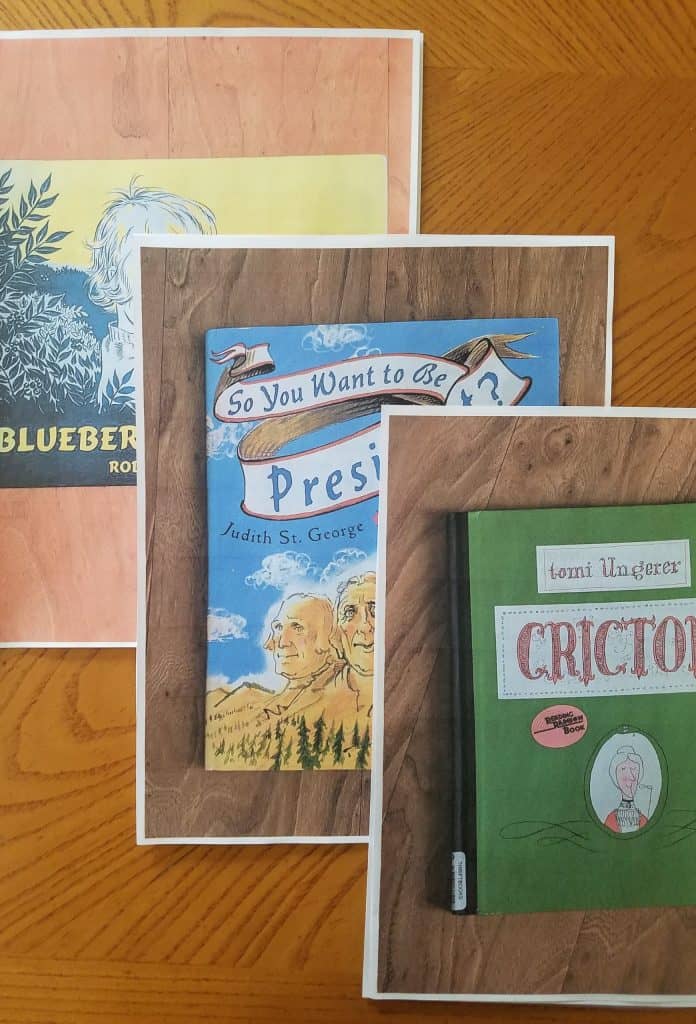
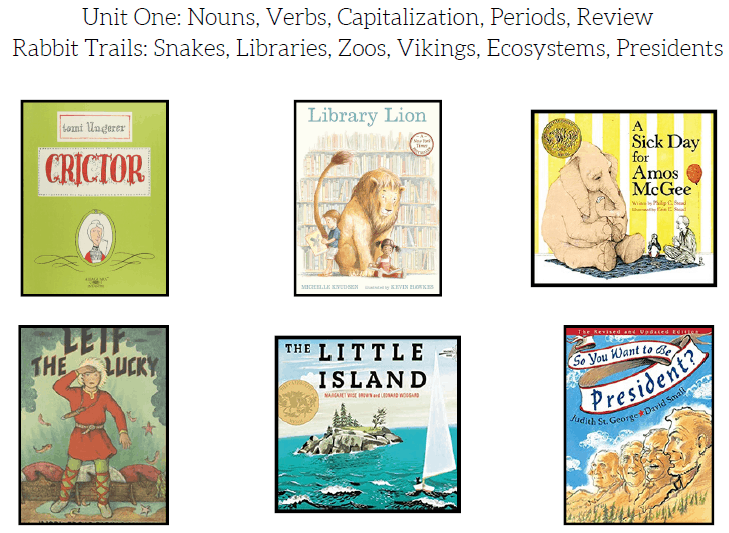
For our review, I decided to try three of the 16 books needed: Blueberries For Sal, Crictor, and So You Want To Be President?.
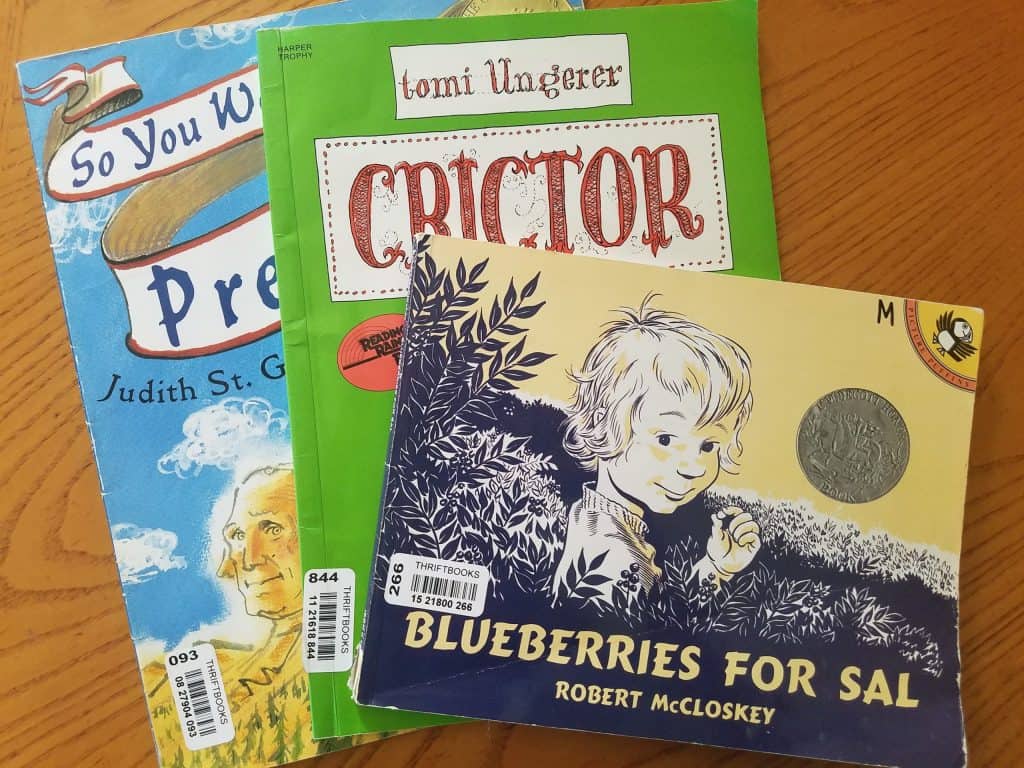
Blueberries For Sal is a timeless story about a child picking blueberries who finds a new friend. Living in Maine, it’s a story that is widely read as we are known for our blueberries and it is a story that I am quite familiar with (and I’m still certain we used to own a copy).
Crictor and So You Want To Be President? were both new to us though. I opted for Crictor simply because so many people were raving about this tale about a boa constrictor. And So You Want To Be President? seemed like a good fit as we are studying US History this year.
Now, this is the part of the post where I tell you I went a little rogue with Rabbit Trails. Crictor is the first title and goes with the first two-weeks worth of lessons. The other two titles, however, are not in order.
The first thing you are going to do with Rabbit Trails is to read the story for the lesson with your child, or have them read the story or parts of it to you. I opted to read all three books to my children. There is a lot of learning a child can do when their minds are free to simply listen to a story read by an adult rather than trying to read it themselves.
After reading, Rabbit Trails Through Literature recommends you ask your child to narrate the story back to you. This is where you gauge how well the story was understood. Feel free to help where your child gets stuck (especially on specifics). Narration is a wonderful tool to use to aid in comprehension in a very low-key and non-aggressive way.
For us, narration is something we are familiar with but if you are not, ask a few simple questions to get your child started. Even younger kids are eager to share what they remember. My youngest, 6, was so excited to share that a little Sal ended up behind a bear! Her eyes got wide as she shared and told me that she would be “super-scared” to be behind a bear.
And my son, who is nearly 10 and a realist, pointed out that a mama-bear probably wouldn’t just look at a child behind them. He started in sharing how in the fall bears are hungry and getting ready to hibernate for winter. That little Sal probably would have been in danger… A rabbit-trail born, before we even started looking, based in his year of studying animals in science.
Following The Rabbit Trail
After waiting for all three books to finally arrive, the kids and I got to work both using the Rabbit Trails curriculum and following a few of our own that came up naturally.
Book #1: Crictor
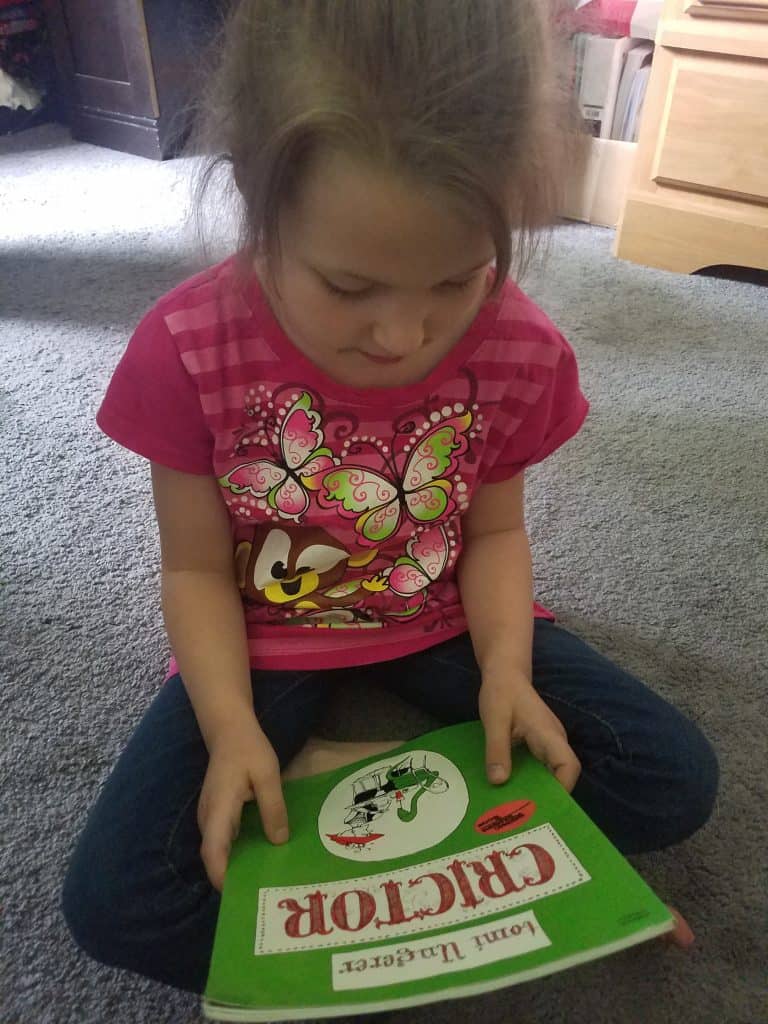
This book is a must-read! In this story, a woman receives a boa constrictor as a gift from her son who is in Africa. She embraces her new pet, knitting him a sweater and taking him to school. The town also embraces Crictor the boa constrictor. It was a fun read that had us chasing geography before we even started with the activities in Rabbit Trails Through Literature.
One of the biggest Rabbit Trails for us came when Crictor was a helpful snake assisting some children who had managed to get their kite tangled in some electrical wires. My son pointed out that a kite tangled in electrical lines is very dangerous, and those kids would have most likely been electrocuted (I told you he was a realist!). My husband is an arborist who works vegetation maintenance for electric companies, so my kids are all very much aware of the dangers of power-lines.
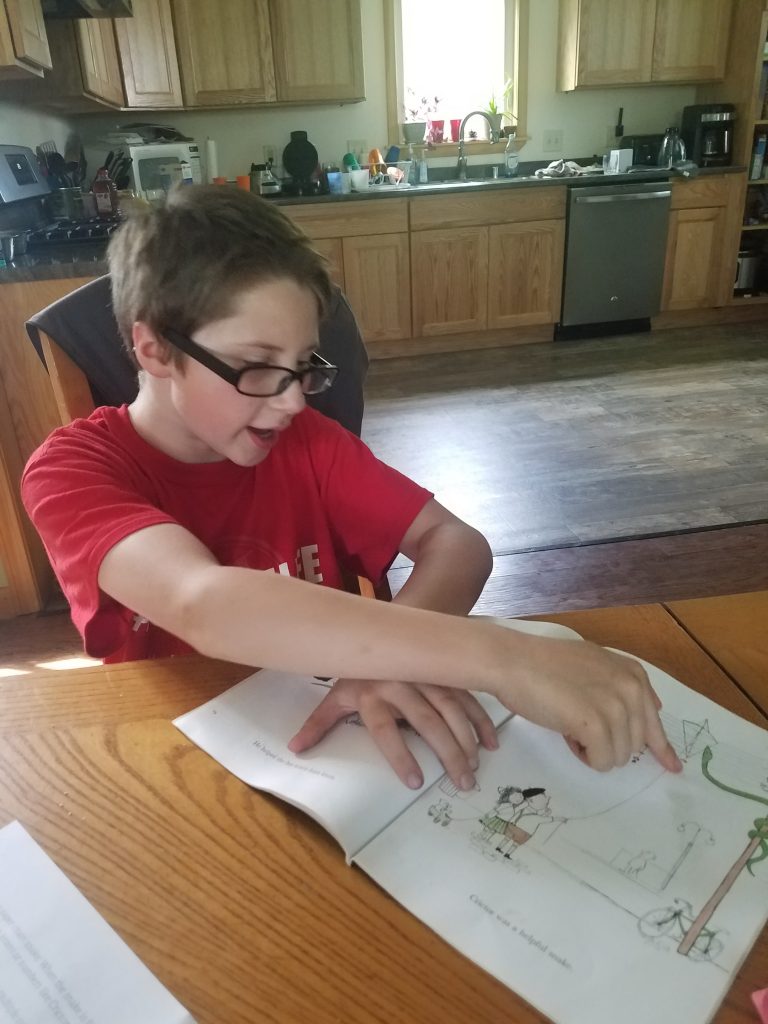
This, however, gave an opportunity to not only discuss electricity, safety around lines, flying kites, but also the difference between fiction and non-fiction (something that is covered later in Rabbit Trails). 😉
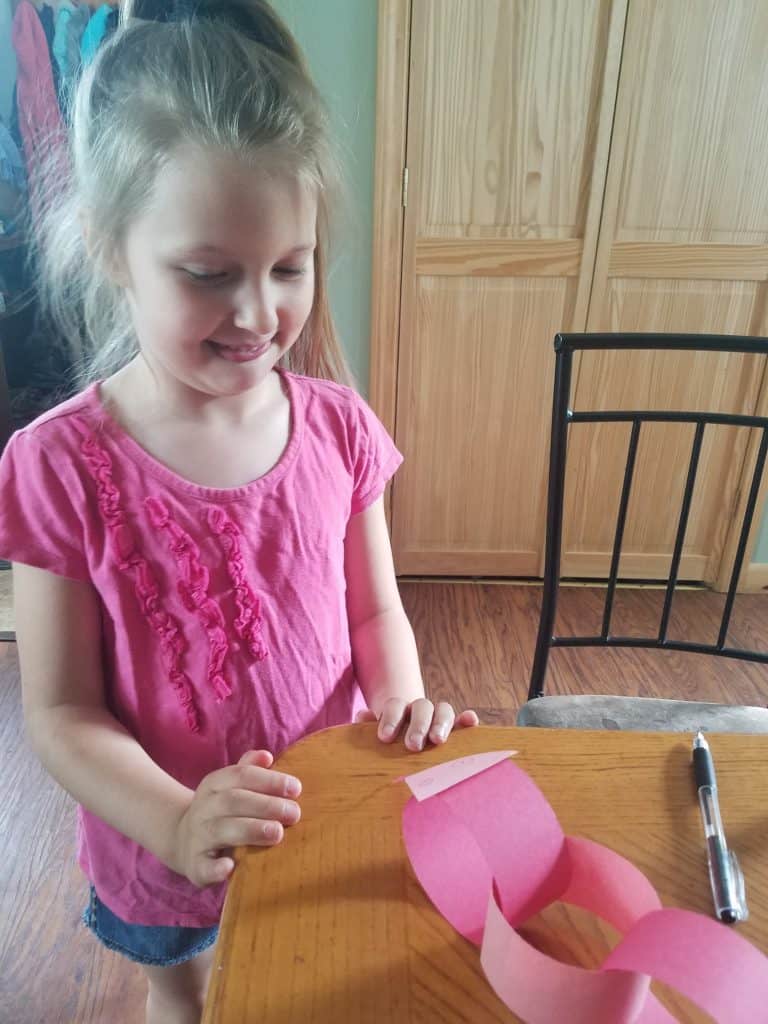
And within the Rabbit Trails curriculum, the kids and I worked on the narration, the scripture included, the letters and numbers Crictor shaped himself into (and discussed some other letters and numbers he could have been), and worked on our very own craft.
Book #2: So You Want To Be President?
As we have been studying US History this year, So You Want To Be President? was a natural choice for us. My daughter had zero interest in this one, however, so I didn’t push it; but my son was intrigued. He dove into this one by himself and then shared the exciting and funny parts with me.
Like this one…
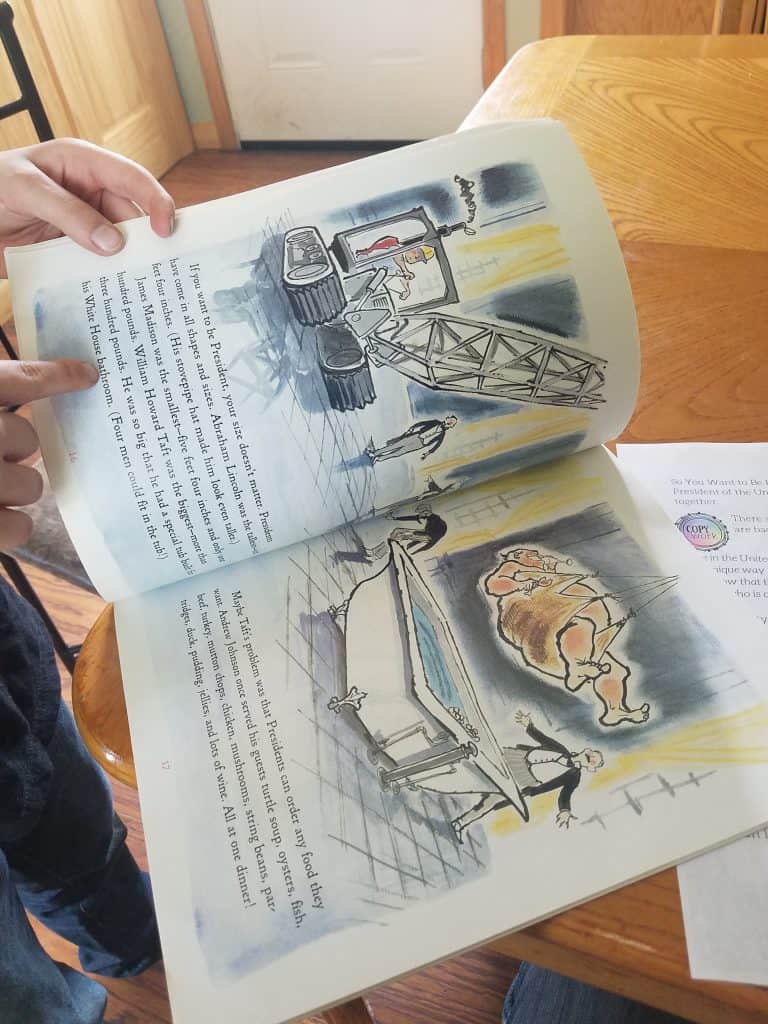
Boys!
I scanned the book and asked him some questions. We stopped on the page of names and I read that there had been 2 presidents named George, to which he replied, “I thought there were 3?”
Smart kid! It turns out this book was written in 2000 and only covers up through President Clinton.
With Rabbit Trails, we opted to skip the narration part as we had been discussing the book already and jumped right in to the scripture portion. For our family, Christian values and biblical teachings are the foundation of our homeschool.
However, if that is not for you, you don’t need to write this program off. Simply skip the scripture work.
So You Want To Be President? is actually a review opportunity for the first unit of Rabbit Trails Through Literature. The lesson for this book (and the 2-weeks or so you would be using it) is to review material learned in the prior weeks: nouns, verbs, capitalization, and punctuation. Ideas for the week including reviewing what you have recorded for verbs and nouns in prior weeks, paying attention to your copywork, and of course, having fun.
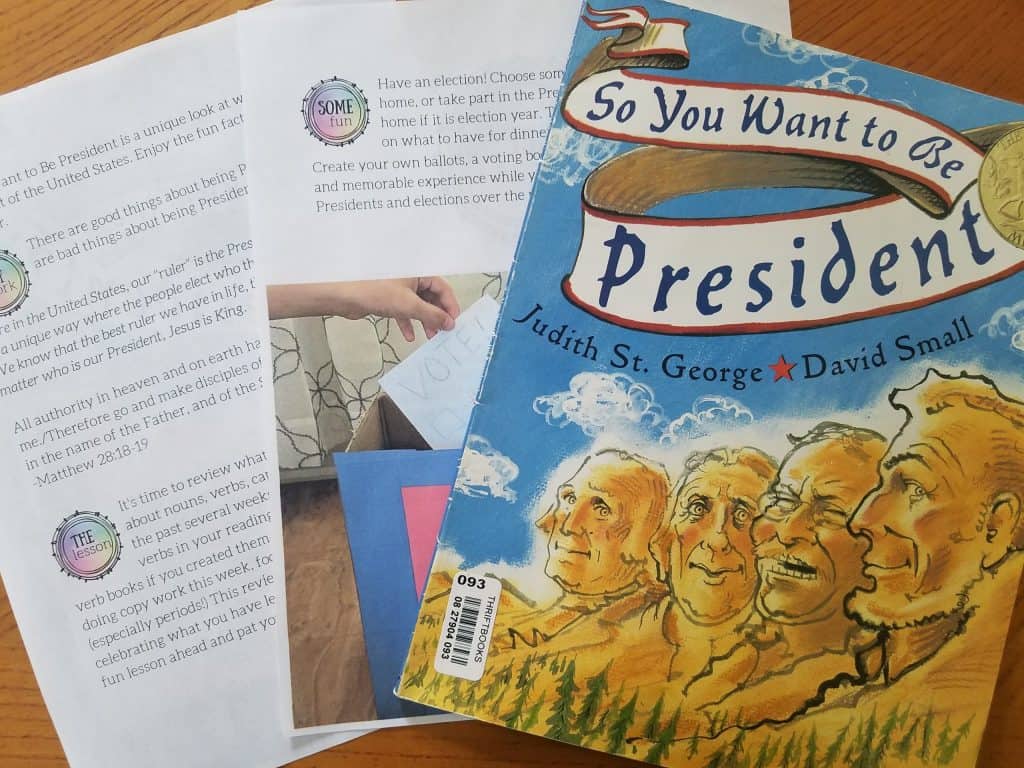
The craft is a great one, but my son wasn’t really interested. He’s not one to enjoy crafts, but your child might enjoy creating a ballot and ballot box, holding a mock-election, and preparing for how to vote when they become an adult.
As for us, we opted to review elections and how they work.
Book #3: Blueberries for Sal
The first book we worked on was Blueberries for Sal, but it is not the first book in the program.
It is, however, a fabulous tale of a little girl and her mother along with a bear cub and his mother. As we read the story we heard many onomatopoeias or sound-words. This was a super fun lesson for my daughter who enjoyed not only sounding like a crow but also various other animals.
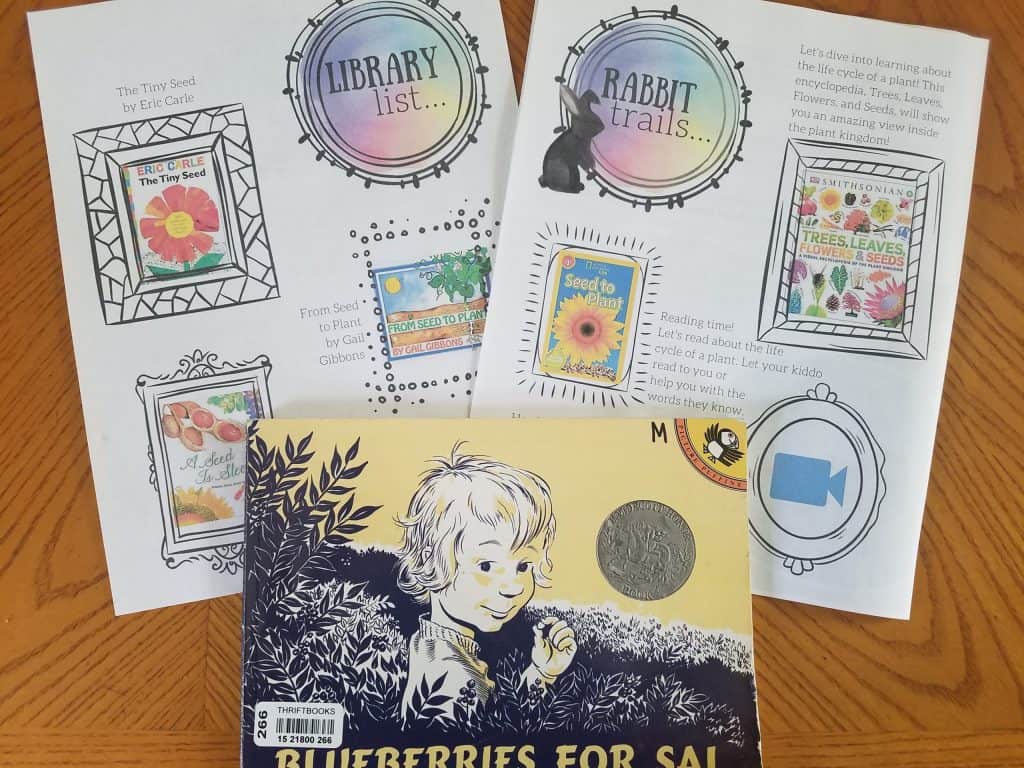
Prior to the lesson though is a verse from Genesis. “That’s in the Bible!” my daughter stated and proceeded to go through the song of all of the books of the Old Testament.
Rabbit trails galore.
The craft for this lesson is painting with blueberries which sounds super fun, but not a project I had any interest in getting involved in. We love learning, but I am not a messy-learning kind of homeschooler.
Additional Rabbit Trail Opportunities
This post has seriously just scratched the surface of all that is included in Rabbit Trails Through Literature.
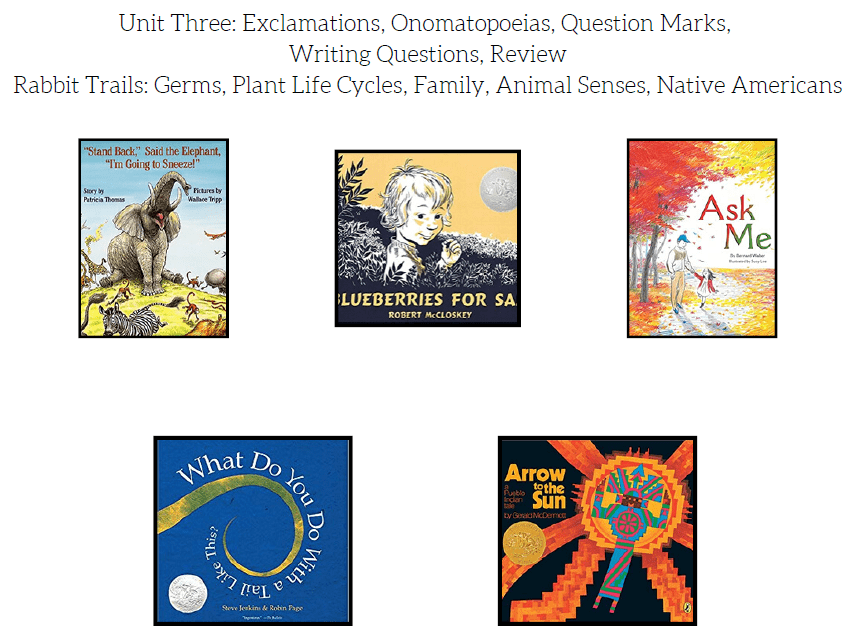
While it does not cover spelling or phonics, the Rabbit Trails curriculum does cover a variety of concepts and skills that are foundational to Language Arts in three main units. Unit 1 focuses on nouns, verbs, capitalization, and periods. Unit 2 focuses on fables, fiction and non-fiction, the parts of a book, and rhyming. Unit 3 focuses on exclamations, onomatopoeias, question marks, and writing questions.
Plus, throughout this curriculum you will naturally be able to explore plants and animals, places, weather, and more. Each lesson includes a list of rabbit trails to explore, additional resources to use, and more books to consider using. You are free to choose to use them all, only use some, or follow the leading of your children and use their interests to guide you.
The World Is Not Divided Into Subjects, Why Is Learning?
Veteran homeschoolers can tell you that without a doubt dividing learning into subjects and never crossing one with another is nothing like life.
Yet, when we can weave seamlessly between the core subjects, interest-based learning can take flight. With literature-based learning, Rabbit Trails Through Literature starts as a simple Language Arts program yet encourages your children to learn about the world around them, effortlessly incorporating history and science.
And for younger learners, this is the ideal method of both teaching and learning.
As for us, I will be ordering a few more of the titles while I wait for my library to open back up and preparing to utilize Rabbit Trails Through Literature from This Bit of Life when we begin our homeschool year in the fall.

Ready To Try Rabbit Trails Through Literature Yourself?
You can view a sample lesson of Rabbit Trails Through Literature here or click here to purchase a copy today. While most of the books you will need for Rabbit Trails Through Literature can be found at your local library, you can opt to purchase them here.

Sharing is Caring – PIN ME!

Kelly Warner is a seasoned homeschooling mom from Maine, where she lives with her husband and their four children—two of whom are proud homeschool graduates. With years of experience navigating the ups and downs of home education, Kelly is passionate about helping families simplify their journey and find encouragement amidst the chaos of daily life. She shares practical tips, inspiration, and real-life homeschooling wisdom on her website, Hope In The Chaos, and across social media.


